Three pillars.
Better client work.
Take control of inherited GTM containers, investigate GA4 findings and check tracking before release. Start with the job in front of you.
01 Tag Manager
Understand the account. Own the handover.
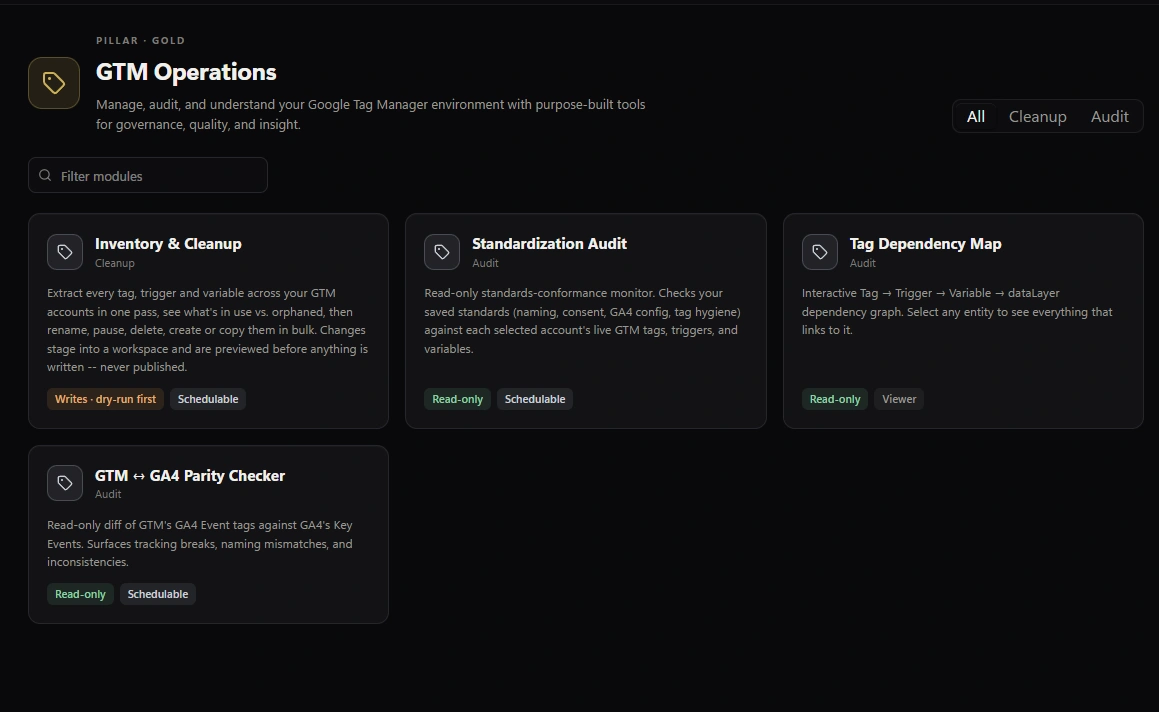
Start with the full picture. Understand what is there, what depends on it and what deserves a reviewed change.
Walk into the handover with a clear picture.
Build an inventory of the inherited container before the first edit. Give the next conversation a concrete starting point.
Build once. Stage it in every brand.
Create or copy tags, triggers and variables into every brand's container from one form and one review. You publish in GTM.
See the connections before you change them.
Trace the tags, triggers and variables around an item. Understand what a proposed edit could affect.
Make consistency something you can check.
Review an agreed naming convention and surface the exceptions that deserve attention.
Give every old tag a considered next step.
Identify cleanup candidates, review their purpose and dependencies, then decide what to retain, pause or retire.
Put your naming convention into practice.
Stage the intended renames across client containers and review the changes before applying them.
02 GA4 & conversions
Find the signal. Focus the review.
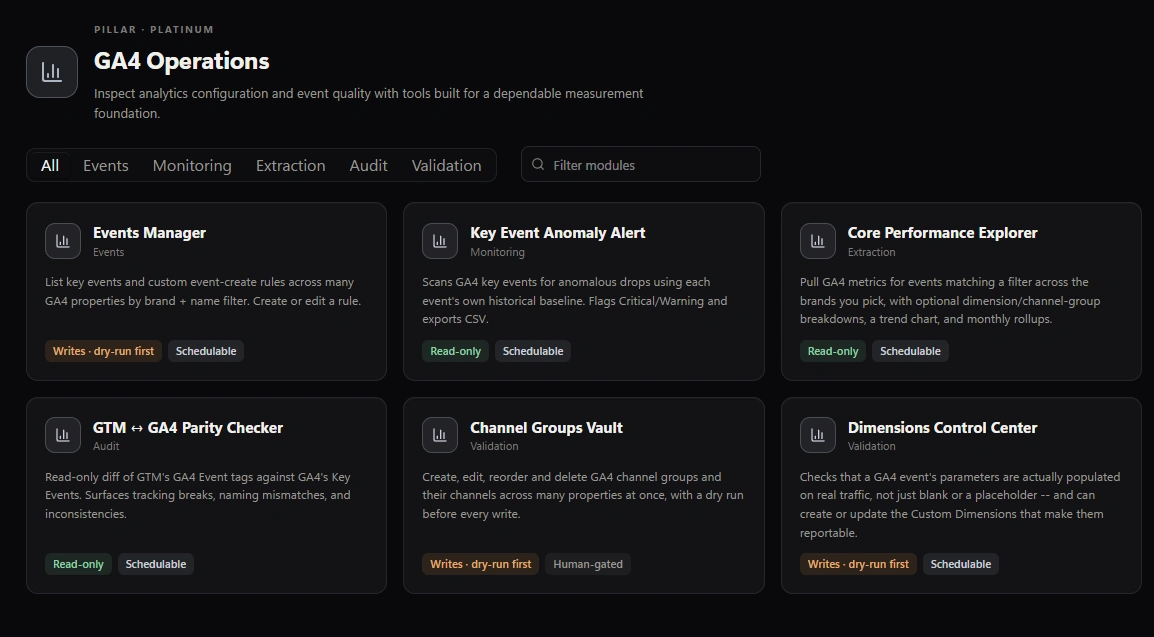
Connect configuration with observed activity. Turn an unusual result into a focused investigation and a clearer client conversation.
Give unusual event activity the attention it needs.
Review a key event against its recent history. Use the finding to decide what to investigate next, with the reporting context in view.
Find where GTM and GA4 tell different stories.
Compare configured events, key events and recent reporting to focus your next verification step.
Keep the rules aligned with the goal.
Review event definitions and rules against the client’s measurement plan before relying on the numbers.
Check the detail behind the breakdown.
Review registration, blank values and placeholders before a dimension becomes part of the client report.
Bring a consistent view to every property.
Use the same events and dates across properties to prepare a reporting run you can review and repeat.
03 Tracking QA
Bring evidence to the release conversation.
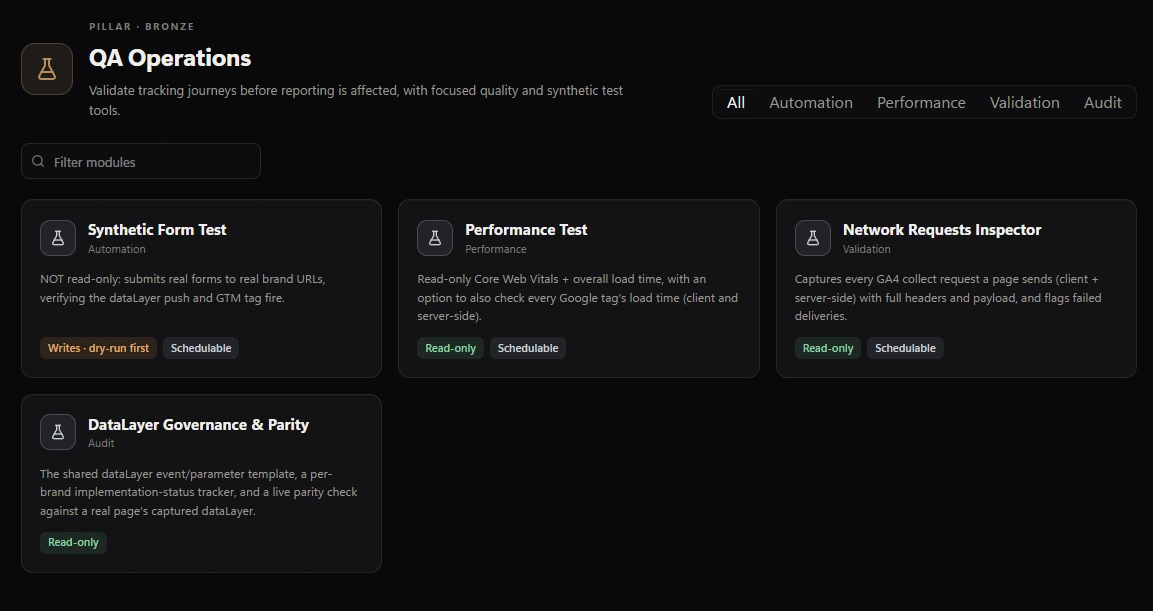
Check the journeys that matter, review the expected events and document what the browser actually shows.
Put the important journey through its paces.
Run an authorised form test and inspect the browser evidence. Separate the journey outcome from event delivery, then verify reporting where needed.
Give implementation a shared reference point.
Keep event definitions, implementation status and captured page evidence together as you review client pages.
Make a performance question measurable.
Compare repeatable page-load checks around a tracking change. Investigate a regression with observations you can revisit.
YOUR NEXT CLIENT JOB
Start with one useful finding.
Run your first audit in Free. Get familiar with the account, review the result and choose the next step with context.